March 2026 · 6 min read
Australia\'s Rooftop Solar Hits 28.3 GW — Now Bigger Than the Entire Coal Fleet
A Historic Milestone
Australia's combined rooftop solar capacity of 28.3 GW now exceeds the nation's entire coal-fired power fleet of 22.5 GW. The country's biggest power station is now on 4.3 million Australian rooftops — and batteries are supercharging the shift.
Rooftop Solar: Australia's Biggest Power Station
Australia reached a landmark energy milestone at the end of 2025: the nation's combined rooftop solar capacity hit 28.3 GW, representing approximately 4.3 million installations across the country. To put that in perspective, Australia's entire coal-fired power fleet stands at just 22.5 GW — meaning rooftop solar alone now surpasses coal by nearly 6 GW.
Clean Energy Council Chief Executive Jackie Trad summed it up: “Our biggest power station now resides on the rooftops of more than 4.3 million households.”
In the second half of 2025, rooftop solar contributed 14.2% of total electricity generation, up from 13.4% in the same period of 2024. This steady growth confirms that solar is no longer a niche technology — it is mainstream Australian energy infrastructure.
Australia's Rooftop Solar by the Numbers
2025 Installation Trends: Fewer Systems, More Power
While the total number of new installations dipped 15% year-over-year — from 300,375 in 2024 to 254,664 in 2025 — the story is more nuanced than it first appears. The capacity added in 2025 reached 2.6 GW, with 1.5 GW installed in the second half alone. Australian households are increasingly choosing larger, higher-capacity systems that generate more power per installation.
Over the past five years, Australia has averaged 2.7 GW of new rooftop solar capacity annually. At this trajectory, AEMO's 2030 forecast of 36.1 GW capacity could be exceeded by 1 GW ahead of schedule — a remarkable achievement driven largely by household investment.
Batteries: The Next Chapter of Australia's Solar Story
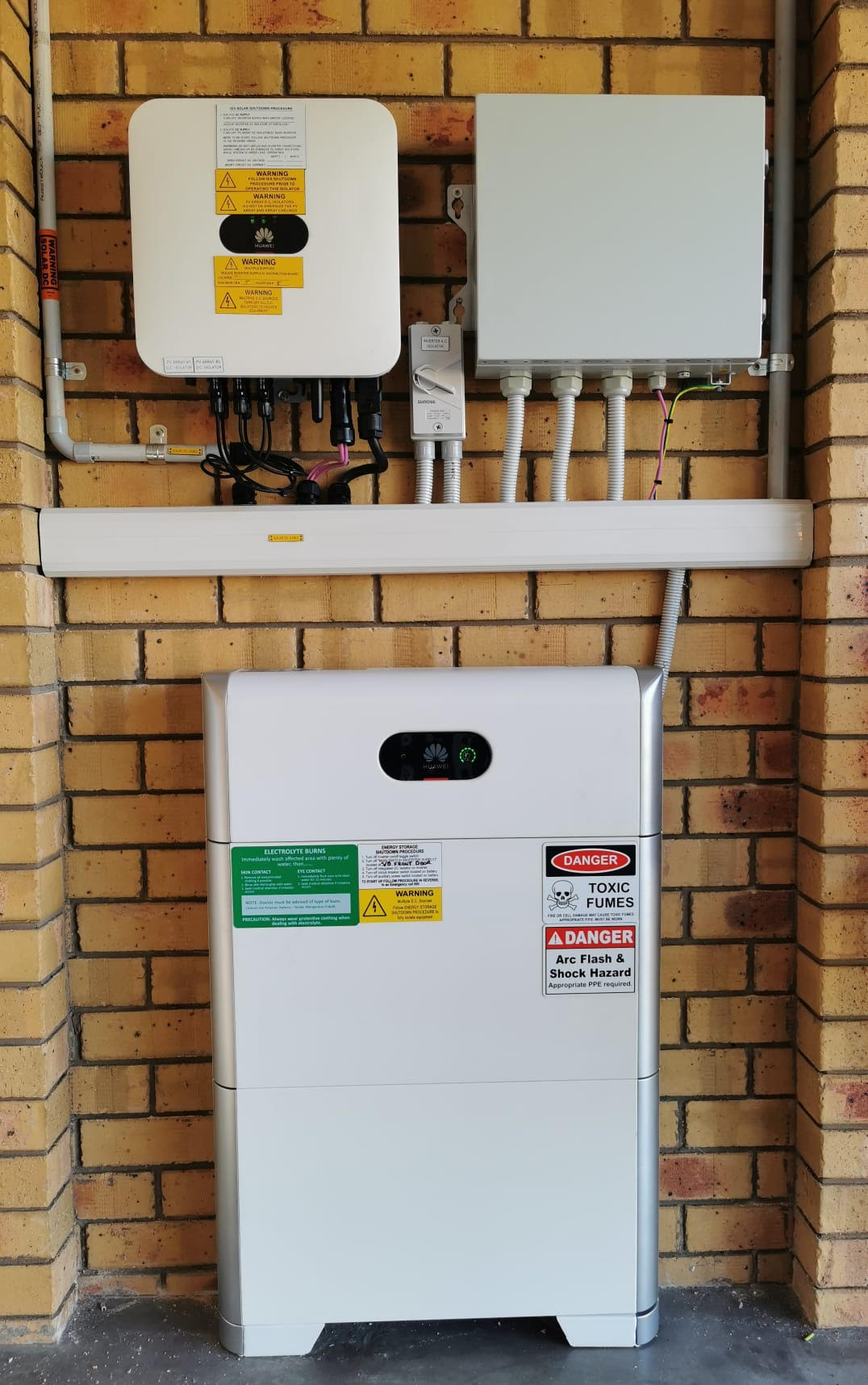
The real headline from 2025 was home batteries. In the second half of the year alone, 183,245 home batteries were installed — a fourfold increase over H2 2024. To put that in context, the H2 2025 battery installations were equivalent to 99% of all battery sales from 2020 to 2024 combined.
By the end of 2025, 454,753 Australian households had home battery systems installed. Jackie Trad noted that the government's $7.3 billion Cheaper Home Batteries initiative, launched on 1 July 2025, had “strapped a rocket” to battery adoption.
The driving forces are clear: falling feed-in tariffs (now under 5c/kWh in many states) have made it uneconomical to simply export solar power to the grid. Batteries allow households to store excess solar generation for use during expensive peak evening hours — turning a depreciating solar asset back into a money-saving one.
Battery Uptake: Explosive Growth
Why This Matters for Every Australian Homeowner
The shift from coal to rooftop solar is not just an environmental story — it has direct financial implications for households. As more solar floods the grid during the day, daytime electricity prices fall. But evening peak prices remain high, creating a growing gap between what solar exports earn and what grid electricity costs during the hours families actually use the most power.
A home battery bridges this gap. By storing cheap daytime solar and discharging it during expensive peak periods, a well-sized battery can save the average Australian household $1,500 to $2,500 per year on electricity bills — and provide backup power during grid outages.
How Super Solar Energy Can Help
Whether you're adding solar for the first time or looking to pair your existing system with a battery, Super Solar Energy makes the entire process simple, transparent, and hassle-free.
Expert System Design
We assess your energy usage, roof orientation, and household needs to recommend a solar and battery system that maximises your savings — not an oversized system you don't need.
Premium CEC-Approved Products
We install market-leading brands including Tesla Powerwall, FoxESS, GoodWe, and BYD — all Clean Energy Council approved with manufacturer warranties of up to 15 years.
Full Rebate and STC Management
We handle all federal STC paperwork, the Cheaper Home Batteries rebate application, and any applicable state incentives — so you receive every dollar you're entitled to.
Fast-Track Installation Before Rebate Changes
With federal battery rebates dropping on 1 May 2026, our priority booking system helps you lock in the maximum rebate before the deadline.
Ongoing Support and Monitoring
We don't disappear after installation. Our team provides ongoing system monitoring, maintenance guidance, and warranty support for years to come.
The Bottom Line
Australia's rooftop solar fleet has officially surpassed the country's entire coal generation capacity — a turning point in the nation's energy transition. With battery adoption accelerating at four times the previous rate and federal rebates declining from May 2026, the window to maximise your savings is narrowing.
Super Solar Energy is ready to help you join the 4.3 million Australian households already powering their homes from their rooftops — with expert guidance, quality products, and full rebate support.
Sources & Further Reading
- PV Magazine — Australia's rooftop solar hits 28.3 GW as home battery uptake surges (February 2026)
- Clean Energy Council — Solar and battery installation statistics, H2 2025
- AEMO — 2030 capacity forecast and generation projections
- Department of Climate Change, Energy, the Environment and Water (DCCEEW) — Cheaper Home Batteries Program